A First Autumn Walk Through an Exposed Garden
An autumn walk through an exposed garden helps you record wind damage, bare soil, water movement and sheltered spots before choosing later changes.

The common mistake on a first autumn visit to an exposed garden is to start pulling out damaged plants or ordering replacements. That can cost you useful clues: a torn leaf, a washed strip of soil or an untouched patch behind a shed can show how the garden behaves. An autumn walk through an exposed garden is best treated as a quiet record-making exercise, not a list of urgent jobs.
Choose a day after ordinary weather rather than a dramatic storm, and take a notebook, a pencil and a phone camera. Walk the same route slowly. Note what you can see, where you saw it and what the weather was like. The aim is to leave with observations that will help later planning, not to diagnose every mark on a plant.
What should you bring on an autumn walk through an exposed garden?
Keep your kit simple. A small notebook is easier to use than a long form, while photographs help you compare the same view later. If the ground is wet, wear shoes with a firm tread; do not enter a slippery slope or step into standing water to get a better view.
- A notebook and pencil for short, dated observations.
- A phone or camera for wide views and close details.
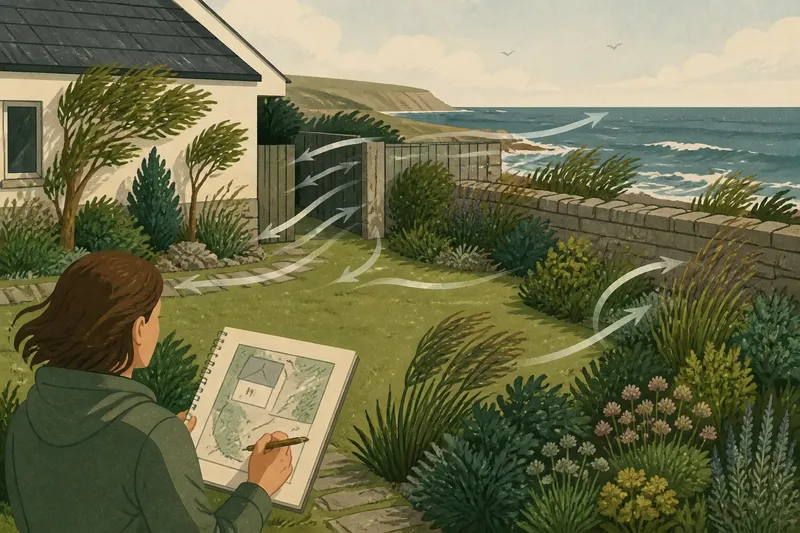
- A simple sketch of the garden, or a blank page for marking directions and features.
- A weather note: wind direction if you know it, recent rain, and whether conditions felt calm, breezy or gusty.
- A few plant labels or a phone note for names you recognise, without stopping to identify every plant.
Take photographs from fixed points, such as the gate, a corner of the house and the far end of a path. Include a landmark in each frame. A close-up of a leaf is useful, but a wider image may show that the plant sits in a narrow passage where wind funnels between buildings.
Where does wind damage appear first?
Begin at the garden’s most exposed edge and work inwards. Look for repeated patterns rather than treating each damaged leaf as a separate problem. Torn foliage, bent stems, one-sided growth and plants leaning in a similar direction can all be worth recording. A single broken stem may have another cause, so describe the evidence before deciding what it means.
Note which plants are affected and which nearby plants look comparatively unmarked. Record the position of walls, fences, gates, gaps and corners. A narrow opening can direct moving air towards one bed, while a solid boundary may leave a quieter patch behind it. Those observations are more useful later than a general note that the garden is windy.
Say you are walking through a hypothetical garden where a young shrub beside a gate has several stems leaning away from the opening, while a similar shrub near the house stands upright. You photograph both from the path and mark the gate on your sketch. The expected observable result is a record that links the difference to place, giving you a reason to look more closely at that opening during later planning without assuming it is the only cause.
Which ground is bare, and what is happening there?
Autumn makes gaps in beds easier to see. Mark bare patches, thin planting, exposed roots and places where wind has lifted or shifted loose material. Record whether the ground is open beneath a plant, beside a path or along a boundary. Avoid labelling every bare patch a failure: it may be a deliberate gap, a seasonal dieback or a place where growth has struggled.
Look at the surface without digging. Is it crusted, loose, covered with leaves or scattered with fine soil? Are leaves gathered against a fence, trapped in a corner or swept clear from a bed? Their distribution can help you describe the movement of air at ground level, though one visit cannot show how the pattern changes in different weather.
Use plain descriptions such as “soil exposed beside the stepping stones” or “leaf litter gathered behind the low wall”. Avoid vague notes such as “poor soil” unless you have a specific observation to support them. If the surface is muddy, cracked or compacted, record what it looks and feels like underfoot; do not infer a soil problem from appearance alone.
Where does rainwater travel or collect?
After rain, follow the visible evidence. Look for small channels, silt, washed mulch, puddles and damp marks on paths or at the foot of a slope. Note where water seems to enter, cross or leave the garden. If it is dry on your chosen day, record that there is no fresh evidence rather than guessing from the shape of the ground.
Pay attention to transitions: a path meeting a bed, a downpipe beside a wall, or a dip below a gate. A thin line of displaced soil may suggest water has crossed a bed, while a shallow pool shows where it remained during that visit. Photograph these signs in context and close up, then add a short note about recent rain if you know it.
Do not clear a channel or redirect water during the walk just to make the garden look tidier. That would alter the evidence you are trying to record. If water appears to threaten a building or creates a safety concern, seek suitable local professional advice rather than treating the walk as a drainage assessment.
What do sheltered spots have in common?
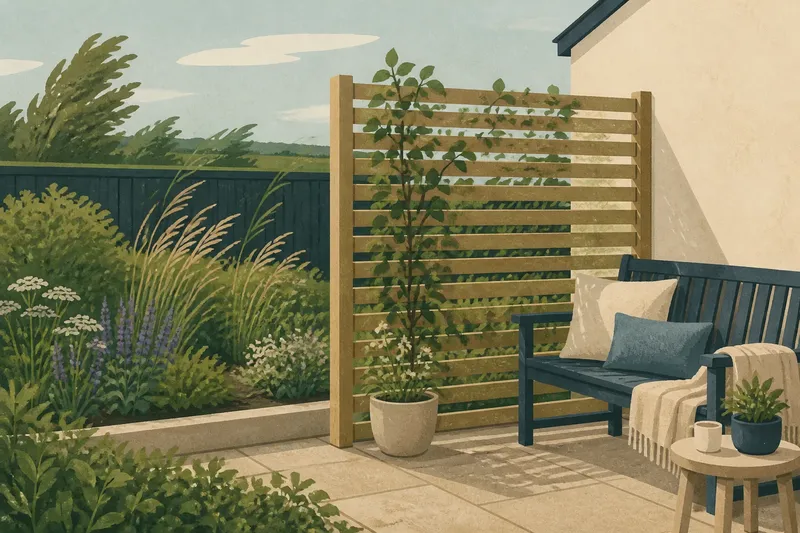
Now look for plants and surfaces that seem less affected. These may be behind a wall, close to the house, beside a dense hedge or in a dip between features. Record the position and the visible signs: leaves still attached, stems upright, soil holding leaf litter or a patch that remains comparatively calm. A sheltered-looking corner is a clue, not proof that conditions remain gentle throughout the year.
Compare each quieter spot with the exposed area beside it. Note what lies between them and whether the shelter comes from a solid surface, vegetation or a change in level. This helps distinguish a sheltered pocket from a plant that simply has a different growth habit. Include the sun and shade you can see at the time, since a corner’s usefulness may depend on more than wind alone.
What questions should your notes answer?
How can I tell wind damage from ordinary autumn change?
Record the specific sign, its location and whether nearby plants show the same pattern. Seasonal leaf loss can look different from torn edges or stems repeatedly bent in one direction, but a walk should capture clues rather than force a diagnosis.
Should I act on a puddle seen during the walk?
Note where it lies and whether the ground around it is also wet, then photograph it with a landmark. One observation can guide a later check, but it does not establish a drainage defect or show how the area behaves in other conditions.
What if I do not know a plant’s name?
Describe its position, shape and visible condition, then take a photograph that includes nearby features. You can identify it later if the name matters for a future decision; the location and condition remain useful in the meantime.
When is the walk finished?
Finish when you have covered the garden’s main edges, beds, paths and quieter corners, and can point to where each note belongs. There is no need to turn every observation into a task on the same day.
How can a short record guide later planning?
Before leaving, write a brief record with four headings: wind damage, bare ground, water movement and sheltered spots. Under each, list locations and visible signs. Add the date and a note about recent weather. Keep the wording neutral: “leaves collected against the shed” is more useful than “the shed protects this bed” if you have not watched the area in varied conditions.
One page is enough if it allows you to find the observations again. Mark each point on a simple garden sketch, and save the photographs with names that identify their locations. When you return, take comparable views. New differences may clarify which clues persist and which belonged to one spell of weather.
This first autumn walk through an exposed garden does not need to produce a planting plan. Its value is a record tied to real places: where foliage is marked, where soil lies uncovered, where rain leaves traces and where plants appear less exposed. Later, use those notes alongside the needs of particular plants and the garden’s seasonal changes. If a decision depends on a product label, manufacturer’s instructions or local rules, check those before acting.
Leave one final note about what you could not observe, such as a dry week with no visible water movement or a sheltered corner you visited only in calm weather. That small gap in the record is useful too: it tells you what to look for next time, without turning an autumn walk into an urgent work list.