Why Coastal Plants Often Have Tough Leaves
Why coastal plants often have tough leaves, and how to read those traits alongside wind, salt spray and soil conditions before choosing a plant.
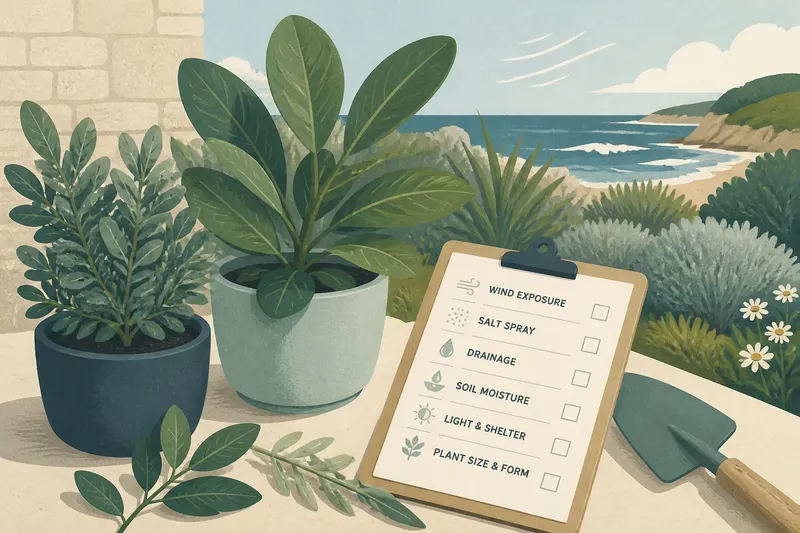
The common mistake is to choose a coastal plant by its tough-looking leaves alone. That can leave a shrub struggling in exposed wind or soil that stays wet, despite its sturdy foliage. Why coastal plants often have tough leaves is a useful question, but appearance cannot tell you whether a particular plant suits your shore, headland or sheltered coastal garden.
What pressures shape coastal leaves?
Coastal plants may face drying wind, bright sun, airborne salt, poor or fast-draining soil, and sudden changes in shelter. The mix differs from one garden to another. A bed behind a house may receive little spray, while an open position can be hit by wind carrying salt from the sea.
Wind can carry away the moist air around a leaf, increasing the challenge of replacing water lost through its surface. Firm or thick foliage may help some plants resist physical damage or limit water loss. These are possible advantages, not a general promise of coastal hardiness.
“Tough leaf” is an informal description. A leaf may feel firm because it is thick, fibrous or supported by a sturdy surface. The same trait can appear in plants with very different needs for shelter, drainage and moisture.
How do small, leathery and waxy leaves differ?
What can small leaves suggest?
Small or narrow leaves may be less exposed to the force of moving air than broad leaves, depending on their shape and how they are held. This can be one clue when considering a windy position, but it does not establish that the whole plant will withstand coastal gusts.
Small foliage does not mean a plant needs little water. Many small leaves, dry soil and persistent wind can still leave a plant short of moisture. Check its watering and soil requirements rather than inferring them from leaf size.
What does “leathery” mean?
Leathery leaves feel firm and may resist tearing or bruising better than delicate foliage. That can be useful in an exposed garden, but a firm leaf does not tell you whether the plant’s stems, roots or overall form suit the position.
A leathery-leaved plant may still need shelter from salt-laden wind or dislike ground that remains waterlogged. Check the plant’s full growing description before deciding where to put it.
Does a waxy surface mean salt tolerance?
A waxy coating can make a leaf less easily wetted and may affect how spray rests on its surface. That is not the same as tolerating salt: repeated salt deposits can still harm foliage, and a glossy or grey-green appearance does not establish how a plant responds to exposure.
If salt spray reaches the bed, look for plant guidance that specifically mentions coastal exposure or salt spray. General descriptions such as “sun loving” or “drought tolerant” do not answer that question.
How should you read foliage in a coastal bed?
Treat leaf traits as prompts for questions, not as a ranking of plants. Small or narrow foliage may prompt you to check wind exposure; leathery foliage may prompt you to check how the plant handles sun and drying; a waxy surface may prompt you to look for explicit salt-tolerance guidance.
Then consider the planting position. Is it open to prevailing wind, behind a fence or wall, or tucked into a sheltered corner? Does rain drain away, or does water linger? Does salt spray reach the leaves? A plant that suits a sheltered garden near the coast may not suit an exposed bed closer to the shoreline.
Say you are choosing between two shrubs for a sunny bed behind a solid garden wall. Imagine the first has small, glossy leaves, but its description calls for free-draining soil; the second has broader, firm leaves and is described as suitable for coastal wind and heavier ground. You check the bed after rain and see that water lingers. The first shrub’s foliage may look promising, but its stated soil needs conflict with the site; the second is the more plausible choice if its other requirements also fit. The observable decision is to set aside the first option unless you can address the drainage issue.
What should you check before choosing a plant?
Use this list to turn visible conditions into a decision. If a plant’s care description is unclear, ask a knowledgeable local nursery for guidance on that specific position.
- Wind exposure: Check whether the bed is open to strong, persistent wind or protected by a building or fence. If it is exposed, choose a plant whose guidance suits coastal wind; otherwise, consider a wider range of plants that match the remaining conditions.
- Salt spray: Look for salt deposits or spray reaching the planting area, and check whether the plant guidance addresses salt exposure. If spray reaches the bed and the guidance is silent, ask the nursery or choose a plant with clearer coastal information; if it does not, do not assume salt tolerance is needed.
- Drainage: Notice whether water drains away after rain or remains around the planting spot. If water lingers, favour a plant suited to moist or heavier soil, or improve the bed only if that is practical; if it drains freely, avoid plants that require persistently moist ground.
- Soil moisture: Check whether the bed tends to dry quickly between rain or stays damp. If it dries quickly, choose a plant that can cope with those conditions or plan suitable watering; if it stays damp, avoid treating drought-tolerant foliage as proof the plant will cope.
- Light and shelter: Note whether the position is sunny, shaded or partly sheltered through the day. If it is sunny and exposed, select for both light and wind conditions; if it is shaded or sheltered, do not rely on a plant’s tough leaves to compensate for a mismatch in light.
- Plant size and form: Check the plant’s expected mature shape and whether the position leaves it room to grow. If it would be crowded or exposed beyond the shelter available, choose a better-fitting plant or a more suitable position.
Which coastal leaf questions do gardeners ask?
Are grey leaves always adapted to salt?
No. Grey foliage can result from features such as fine hairs or a pale surface. Colour alone does not confirm that a plant tolerates salt spray or exposed coastal weather.
Can a tough leaf mean a tough plant?
Not necessarily. Roots, stems and overall growth habits also affect a plant’s response to wind, soil and moisture. A plant with firm leaves may still need shelter.
Should you choose the thickest leaves?
No. Thickness is a clue to investigate, not a reason to prefer a plant automatically. Match the plant’s stated needs to the actual planting position.
Do coastal plants need a seaside garden?
Not always. A plant associated with coastal conditions may grow elsewhere if its light, soil and moisture needs are met. A coastal location, however, does not make every small- or waxy-leaved plant suitable.
What can leaf traits tell you about coastal plants?
Why coastal plants often have tough leaves becomes clearer when you consider the pressures around them: wind, drying, salt spray and exposed ground. Small, leathery or waxy foliage may offer a clue about one response, but none is a substitute for checking the plant’s full needs against the bed.
When choosing coastal plants, use foliage to decide what to investigate next. Confirm the plant’s guidance for the specific exposure, then check the soil and shelter where it will grow. If the description leaves an important question unanswered, a local nursery can help you compare it with conditions in your garden.