Wind, Not Just Salt: Reading Exposure Before You Plant
Read garden wind exposure before planting to spot gust paths and sheltered pockets, then place each plant where its form and needs are more likely to suit.
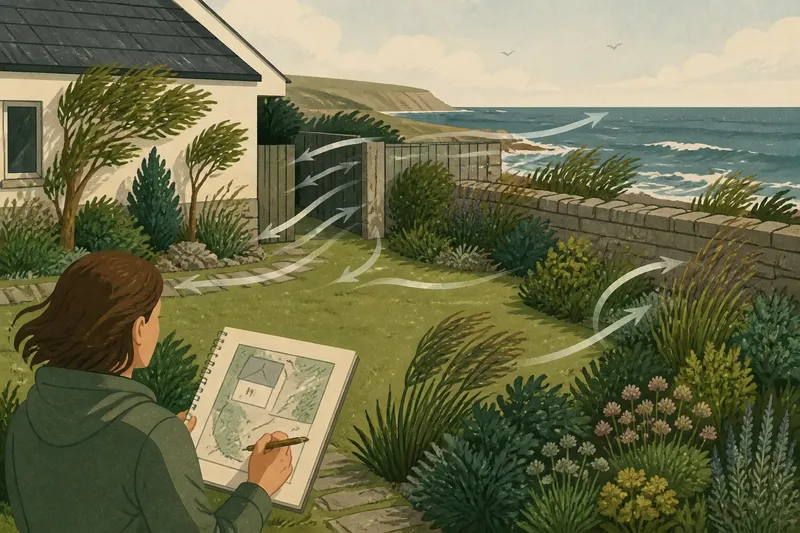
The common mistake with coastal planting is to treat the whole garden as equally exposed because it sits near the sea. That can leave a delicate plant in a gust corridor while a tougher one languishes in a calm corner. Reading garden wind exposure before planting helps you match each spot to a plant’s needs, rather than relying on a single coastal label.
1. Watch the garden before choosing a planting spot
Wind exposure is not simply a question of which way the prevailing wind comes from. Buildings, fences, slopes and neighbouring gardens redirect moving air. A gust can speed through a gap, curl around a corner or lose force behind an obstacle. The result is a patchwork of conditions within a small plot.
Begin by observing the garden from indoors and during ordinary outdoor visits. Notice which areas move first when the wind rises: leaves on a tree, loose stems in a border or a hanging ornament. Check the same places in more than one kind of weather. A calm afternoon will not reveal the route a strong gust takes.
Make a simple sketch of the garden and mark the direction the wind is coming from during each observation. A paper garden plan is enough. Note where movement is most pronounced and where plants appear comparatively still. These are clues, not a permanent forecast; weather direction and strength change.
2. Trace the routes that gusts follow
Look for openings and edges that channel air. A narrow gap between a shed and a fence, a passage beside a house, or an unobstructed line across a lawn can funnel a gust. At corners, air may turn and strike plants from a direction that the garden’s overall layout does not suggest.
Watch for repeated signs: stems leaning the same way, foliage brushing against a wall, or dry leaves collecting in one corner. These clues help distinguish a regular route from the effect of a single storm. They can also reveal that a bed which seems protected from the main wind is exposed to a crosswind.
Imagine a new gardener with an open lawn between the house and a side fence. In breezy weather, they notice loose leaves travelling through a narrow passage and bending young plants beyond it. They choose a different position for a tender shrub, away from that line, and plan to assess the new spot after observing it in several windy conditions. The useful result is a planting decision based on the gust path rather than on the garden’s coastal setting alone.
3. Find sheltered pockets without assuming they are calm
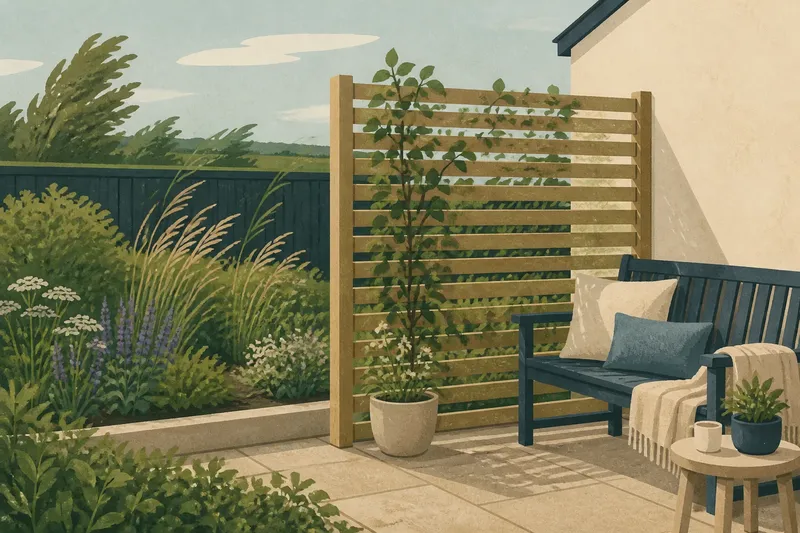
A sheltered pocket is a place where moving air loses force, not necessarily a still place. The lee side of a wall or building may offer relief from one direction but catch a swirl from another. A courtyard can feel calm at ground level while air moves strongly above it.
Compare nearby spots instead of declaring an entire bed sheltered. A small area beside a fence may be calmer than the open border, while the fence’s end creates a turbulent patch. Look at how existing plants respond, and consider their height: a low herb and a tall shrub do not experience precisely the same airflow.
Keep light, space and soil in the decision as well. A protected site may be too shaded for a sun-loving plant, or too dry beneath an overhang. Shelter is one part of a plant’s conditions, not a reason to ignore its other needs.
4. Place plants by the exposure each spot receives
Think of the garden as a series of planting positions, from open and gust-prone to comparatively sheltered. Match a plant’s mature form and flexibility to what you have observed. Plants with pliable stems may suit a breezy position better than tall, brittle growth; a more delicate plant may be better placed where gusts are softened.
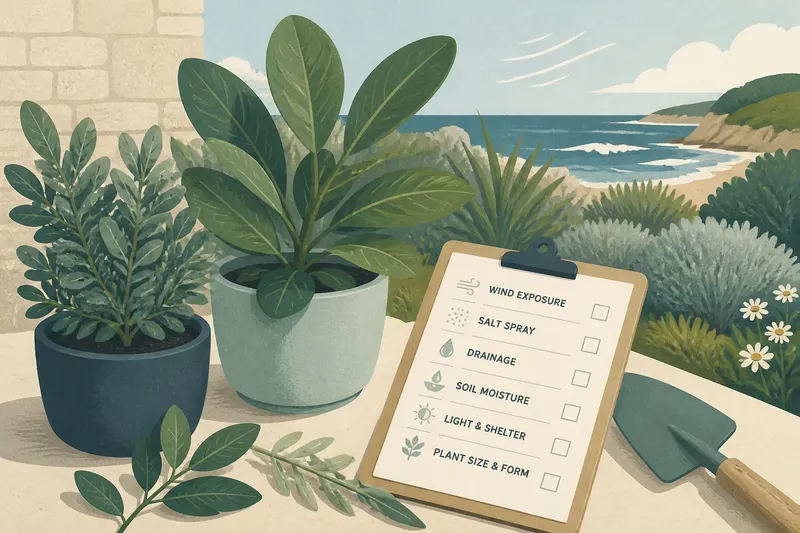
Do not treat this as a rigid ranking of plants. A species described as suitable for coastal gardens may tolerate salty air yet still struggle with repeated buffeting, drying winds or exposed roots. Check the plant label and, where available, the grower’s guidance for its light, soil, moisture and exposure preferences. Local conditions can differ even between nearby gardens.
Leave room for plants to grow into their expected shape. A spot that feels spacious around a small nursery plant may become crowded or windier as its neighbours develop. Consider the mature height and spread when deciding whether the position will remain appropriate.
5. Recheck observations as the garden changes
Wind patterns are affected by more than weather. A new shed, a removed tree or a changed fence can alter how air moves through the plot. Seasonal growth can also change shelter: a leafy shrub may soften airflow in one part of the year and offer less protection when bare.
After planting, notice whether the plant’s response matches your expectation. Repeated leaning, damaged foliage or drying may point to exposure, though other causes are possible. Compare the plant with a nearby one and inspect soil moisture before deciding that wind is the problem. If a position seems unsuitable, moving a plant while it is small may be easier than waiting until it becomes established.
What should you check before planting?
How can I tell which way the wind usually comes from?
Observe the garden during different breezy conditions and note the direction of movement in trees, loose foliage and other visible features. A weather forecast can add context, but the garden’s obstacles may redirect wind locally.
Does a wall always create a sheltered spot?
No. The wall may block wind from one direction while its end or corner redirects air into a nearby bed. Compare the area beside it with the space beyond the corner.
Can a coastal plant still suffer in wind?
Yes. Tolerance of salty air does not automatically mean tolerance of strong gusts, drying conditions or repeated movement. Consider the specific site and the plant’s stated growing needs.
When should I observe wind before planting?
Observe on more than one occasion, including weather that makes the garden’s air movement visible. If you have only seen the site in calm conditions, treat your assessment as provisional and choose a position you can review.
Before you buy, mark the open routes and calmer pockets on a sketch, then compare the intended plant’s needs with the exact planting spot. That small pause makes garden wind exposure a usable part of the planting decision, rather than a label attached to the whole coast.