Hedge, Wall or Open Screen? Choosing a Garden Windbreak
A garden windbreak can shelter plants, paths and seating without creating a new gust problem. Compare hedges, walls and screens to suit your layout.
The common mistake with a garden windbreak is to choose the most solid barrier available. A tall wall may stop wind at its face yet leave a turbulent, gusty patch behind it, where tender plants and outdoor seating remain uncomfortable. The better choice depends on how wind moves through your particular garden and what needs shelter.
Hedges, walls and open screens interrupt airflow in different ways. A porous hedge lets some wind pass through; a solid wall blocks it; an open screen reduces the force without sealing the space. Consider the sheltered area you need, how much room the barrier can occupy and whether it must also mark a boundary or provide privacy.
What should a garden windbreak protect?
Start with the part of the garden that matters most. A vegetable bed, a seating area and a narrow side path need different kinds of shelter. A barrier that works well beside one may be excessive or ineffective beside another.
- For a planting bed: look for steady, moderate shelter that does not leave the ground in persistent shade. A porous hedge or a suitably positioned open screen may soften wind while keeping the space less enclosed.
- For a seating area: a screen can provide local protection without committing the whole garden to a tall boundary. Consider whether the protected spot needs a view out, privacy, or both.
- For a boundary: a hedge or wall can combine shelter with enclosure. Their footprint, upkeep and effect on light should matter as much as their ability to block wind.
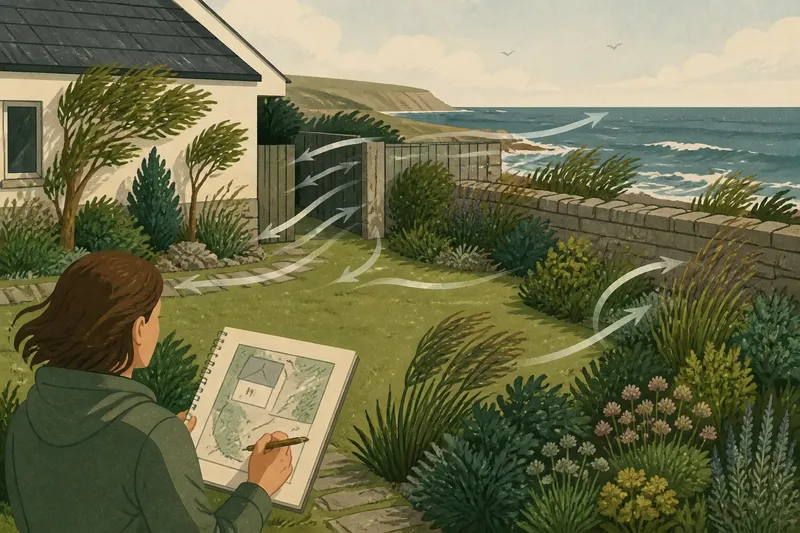
Think about where the wind enters, where it travels next and whether a barrier would redirect it towards a path, doorway or neighbouring bed. A windbreak does not need to surround the entire garden. A short, well-placed section may protect the intended spot while leaving other areas open.
When does a porous hedge fit best?
A hedge is a strong option when you want a living boundary that filters wind rather than stopping it abruptly. Its leaves and branches create a permeable barrier: some air passes through, while the remaining flow is slowed. This can make the change in exposure behind it gentler than the sharp transition at a solid wall.
Hedges suit gardens where planting, habitat and a softer appearance are priorities, and where there is enough space for growth. They need time to establish and room for their mature width. A hedge can also cast shade, compete with nearby plants for water, and need regular trimming to keep it within bounds. Choose a form suited to the site and the amount of care you can provide, rather than assuming any dense shrub will make a useful windbreak.
If your garden is narrow, or you need shelter immediately, a hedge may take up too much room or provide too little protection while young. It can still make sense if you can pair it with a temporary screen during establishment. Check the plant’s mature size and local growing conditions before choosing it.
When is a wall the better choice?
A wall makes sense where the garden needs a durable, compact boundary and a clear division between spaces. It can offer privacy and shelter at the same time. In a small courtyard, for instance, a wall may be more useful than a hedge that would occupy valuable planting ground.
The trade-off is airflow. Wind meeting a solid barrier may rise over it or curl around its ends, creating a disturbed area rather than a calm one. The effect depends on the wall’s position and the surrounding layout, so do not assume that the nearest spot on its sheltered side will be the quietest. A wall may also reduce light and make a sheltered corner feel enclosed.
Choose a wall when a firm boundary is already needed and its shade, appearance and airflow effects suit the space. If you only need to take the edge off wind around a bed, seating or young plants, a more permeable barrier may be a better match. Structural work should be planned and carried out by a qualified professional where required; check local rules and the relevant instructions before making changes.
Would an open screen suit a small or changing garden?
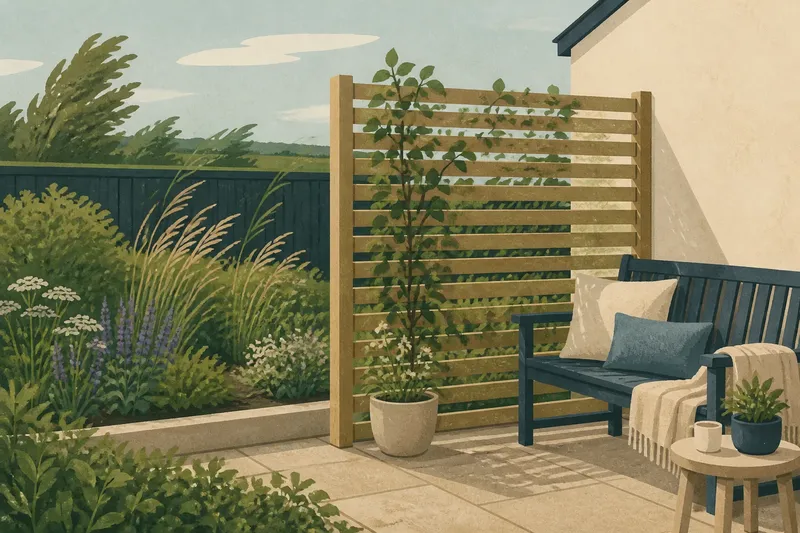
An open screen can be useful when you need targeted shelter without planting a permanent hedge or building a solid boundary. Timber slats, trellis with suitable climbing plants, or a purpose-made garden screen can interrupt wind while retaining gaps for air to pass. Its appearance and degree of openness vary, so choose one that suits both the setting and the level of shelter you want.
Screens work well beside seating, along an exposed patio edge or near a bed that needs a local buffer. They can also help where the garden’s use changes: a panel may be repositioned or replaced more readily than a mature hedge or masonry wall. A screen is not automatically low-maintenance, though. Timber may need care, climbers need support and room, and a freestanding panel must be suitable for its location.
If the main need is privacy, check how the gaps look from the places people will actually stand. If the goal is airflow reduction, consider whether a tightly closed panel would create the same abrupt disturbance as a wall. A more open design can offer a middle ground.
Which windbreak fits your garden layout?
Use the situation, not the material’s reputation, to make the decision:
- You have a roomy boundary and want a living edge: choose a porous hedge if you can allow for its eventual width and ongoing care. It filters wind and can sit naturally alongside other planting.
- You have a small courtyard and need a firm division: consider a wall if the loss of light and the enclosed feel are acceptable. Its boundary function may justify the more abrupt interruption to airflow.
- You need shelter around one seating spot: an open screen is often the more focused choice. It avoids changing the character of every bed and path.
- You want a planted look but need shelter before plants establish: consider a suitable screen as a temporary or complementary measure, then review whether the hedge alone meets the need.
- You are unsure where the gusts are strongest: observe the garden during breezy conditions before committing to a permanent barrier. Note where leaves whip, doors catch the wind, or seating becomes uncomfortable.
Say you have a narrow patio where wind makes a bench unpleasant, but the adjoining border receives useful sun. An invented, practical choice would be to place an open screen beside the bench rather than build a tall wall across the boundary. The expected observable result is a more usable seat, with less shading of the border and airflow still able to pass through the panel.
How can you judge the effect before committing?
Mark the proposed line with garden canes and string, or use lightweight temporary panels that are safe and stable in the conditions. Spend time in the area the barrier is meant to protect. Notice whether the proposed position would shade plants, narrow a route, block a view or send gusts towards another useful part of the garden. Do not leave temporary materials unsecured in windy weather.
It also helps to sketch the garden from above. Mark the usual wind direction, the exposed edges, doors, paths, beds and the spot needing shelter. The sketch is not a prediction of exact airflow; it is a way to catch obvious conflicts before choosing a permanent feature.
Which garden windbreak questions matter most?
Does a hedge stop wind completely?
No. A porous hedge filters airflow, allowing some wind through while slowing the rest. Its shelter depends on its density, position and condition, so it is better understood as a buffer than a sealed barrier.
Is a solid wall always more sheltered behind?
No. Wind can rise over or flow around a wall, and the area immediately behind it may remain unsettled. Consider the whole space and observe the likely gust paths rather than judging only by distance from the wall.
Can a screen protect just one part of a garden?
Yes. A screen can be placed near a seating area or planting bed to focus shelter where it is needed. Its openings and placement affect how air moves, so choose a design that does not make the spot feel boxed in.
Which option needs the least ongoing attention?
A wall may need less routine care than a hedge, while a screen’s upkeep depends on its material and any plants growing over it. Compare maintenance alongside space, light and the kind of boundary you want.
For a garden windbreak, the most useful question is not which barrier is strongest but which one fits the job without creating a new problem elsewhere. A hedge suits a roomy, planted boundary; a wall suits a compact space that also needs enclosure; an open screen suits local shelter and flexibility. Keep the intended sheltered spot in view, and let the garden’s layout decide the material.